How to Make Sushi at Home (Without Losing Your Evening to It)
Rice, fish, rolling technique and plating, in the order a home cook should actually tackle them, plus how to scale the same night from six friends to everyone you know.
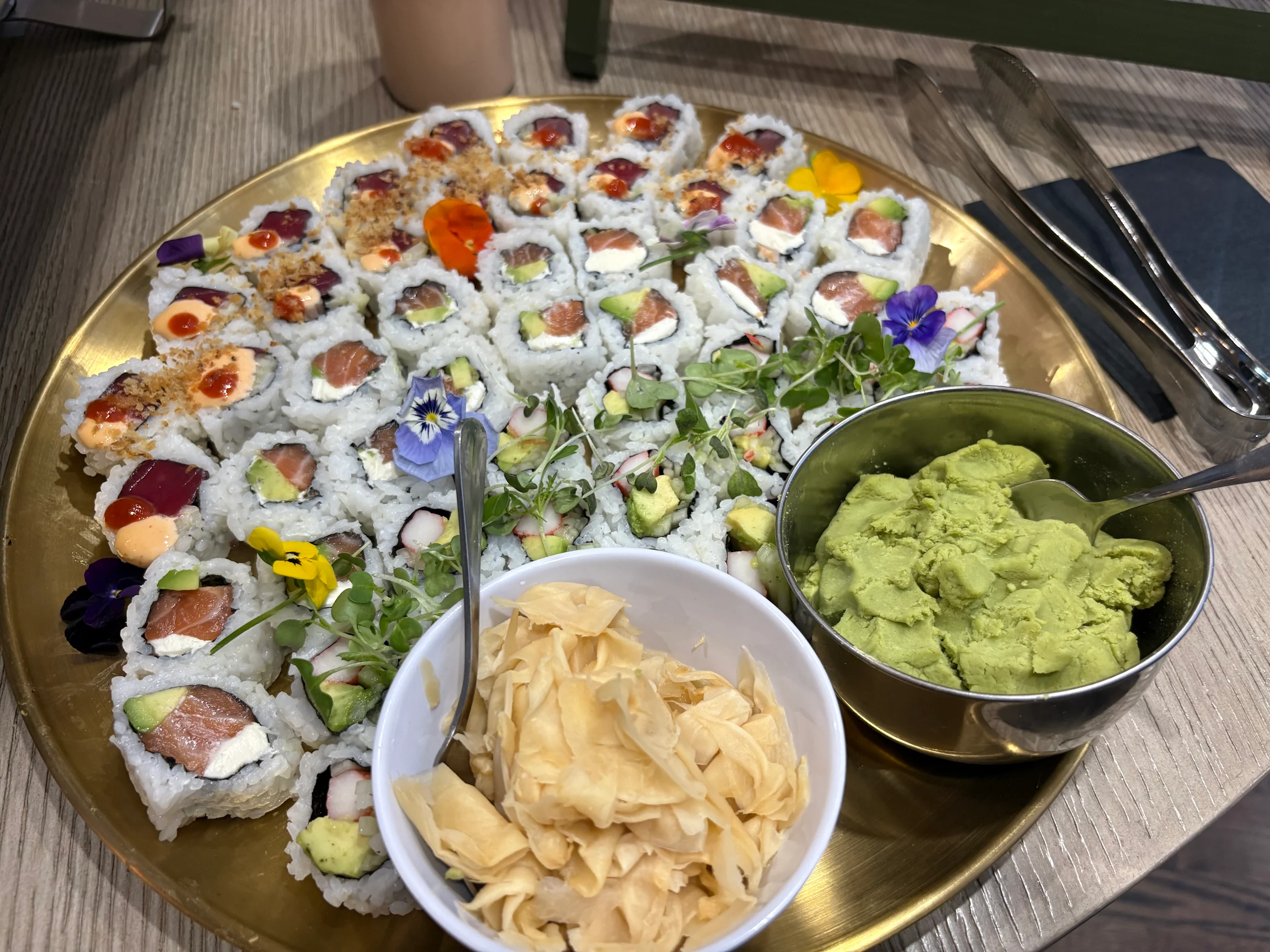
Sushi at home has a reputation for being either impossibly technical or a sad plate of falling-apart rolls. Neither is true. What trips people up is order of operations: most home cooks start with the fish, when they should start with the rice and the clock.
Here is a genuinely workable home method, plus the part nobody tells you, which is how to make the night itself feel like an event rather than a cooking project you regret starting at 6pm.
Start with the rice, always
Rice is eighty percent of the result. Use short-grain Japanese rice, nothing else. Rinse it in cold water and swirl with your hand until the water runs nearly clear, usually four or five changes. Drain it fully and let it sit thirty minutes before cooking, which gives you evenly hydrated grains instead of a chalky center.
Cook it, then season it while it is hot. A workable ratio for three cups of cooked rice: four tablespoons rice vinegar, two tablespoons sugar, two teaspoons fine salt, warmed just enough to dissolve. Fold it in with a cutting motion, never a stir, or you crush the grains into paste.
Then let it cool to just above room temperature. Cold rice will not hold a roll together; hot rice steams the nori limp. Body temperature is the target.
Buying fish you can serve raw
Ask your fishmonger directly what is appropriate to eat raw today. That is the whole question, and a good counter will answer it honestly. Salmon and tuna are the reliable starting points; yellowtail is worth it when you see it. Buy the day you are serving, keep it cold on the drive home, and slice it last.
- Buy from a counter with turnover, not from a tray that has been sitting
- Look for firm, glossy flesh with no gap between muscle layers and a clean, oceanic smell
- Keep it on the coldest shelf, wrapped, and slice within a few hours
- Slice across the grain with a single pulling motion, about a quarter inch thick
- Nervous about raw? Poached shrimp, crab, smoked salmon, seared tuna and tempura vegetables build a complete menu with zero raw fish
Rolling, in the order you should learn it
Learn hosomaki first, the thin roll with nori on the outside. It teaches the two things every other roll depends on: how little rice you actually need, and how much pressure the mat wants.
- 01Lay a half sheet of nori shiny side down on a mat wrapped in plastic wrap.
- 02Wet your hands, then spread a thin layer of rice over the nori and leave a clean inch bare along the far edge. Thin. Thinner than feels right.
- 03Lay your filling in a single line across the near third, resisting the urge to overfill.
- 04Roll the near edge up and over the filling, tuck it in firmly with your fingertips, then continue rolling and press gently along the length to set the shape.
- 05Wipe your knife with a damp cloth, then cut with one long pull, wiping between every slice. Sawing is what shreds a roll.
Then the inside-out roll everyone pictures
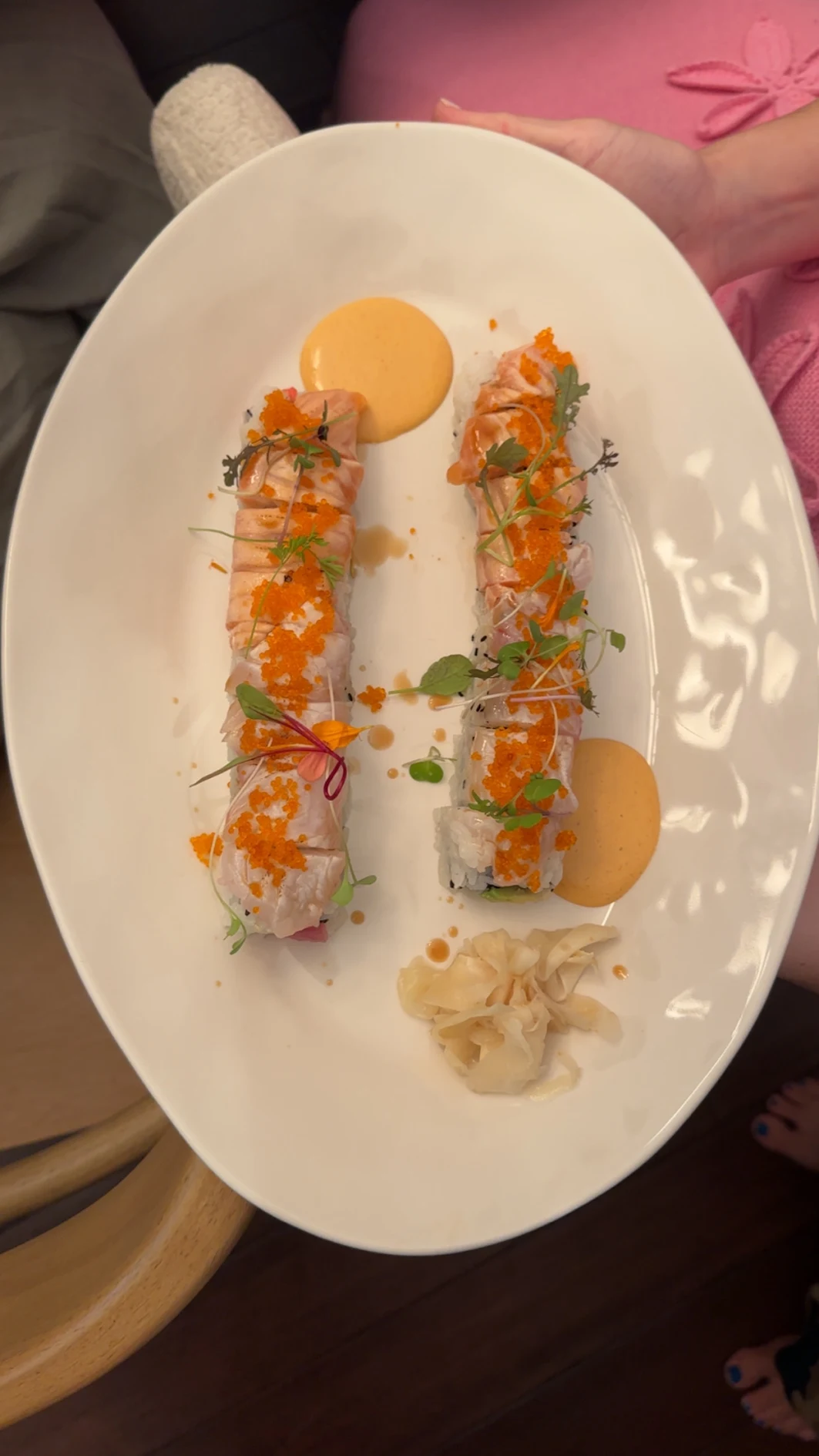
Uramaki is the same roll flipped: rice spread on the nori, the whole thing turned over so the rice faces the mat, filling laid on the bare nori, then rolled. Coat the outside in sesame or tobiko before slicing. It is more forgiving than hosomaki once your rice layer is under control, which is exactly why it should come second, not first.
Nigiri is the humbling one. A small oval of lightly pressed rice, a dab of wasabi, a slice of fish draped over it. There is nothing to hide behind, and it is the fastest way to find out whether your rice seasoning is right.
Build a menu, not just rolls
An evening of nothing but rolls gets monotonous by the second plate. Give the table something bright and crunchy to return to between bites, and something warm so the meal has an anchor.
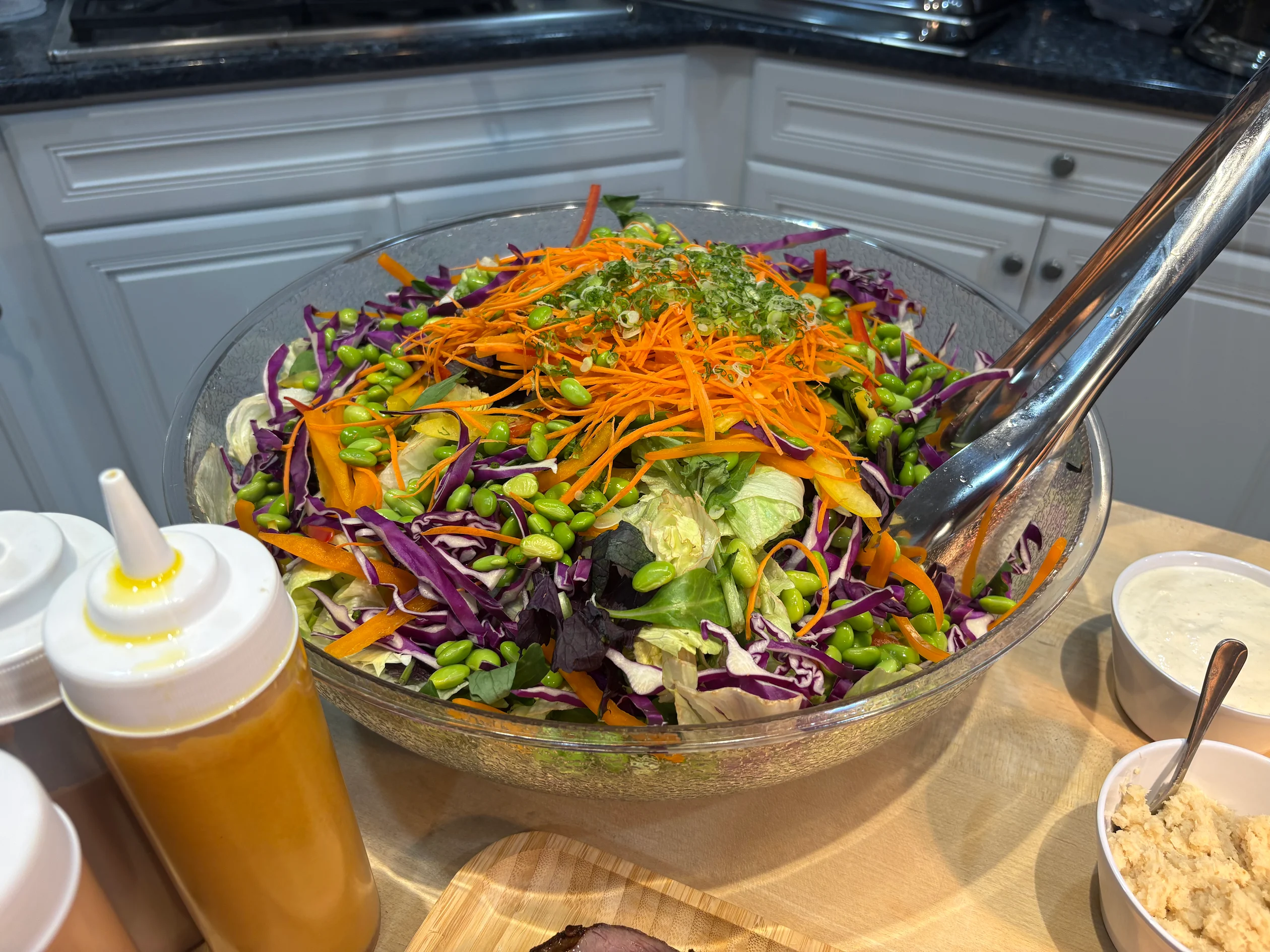
- A crisp Asian-style chopped salad with a sharp sesame-ginger dressing
- Edamame with flaked salt, and quick-pickled cucumber
- Miso soup, which takes ten minutes and makes the meal feel finished
- One warm item: gyoza, karaage, or tempura vegetables
- Dessert made the day before, so the last hour belongs to your guests
Small and intimate, or invite everyone you know
A sushi night scales in either direction, but the format has to change with the guest count. For four to eight people, put everyone around one counter and make it hands-on: shared boards, one pile of fish, plenty of conversation while wet hands are busy.
For a bigger crowd it becomes a service problem instead of a cooking problem. Plate in waves so nothing sits, set the rolls out as platters rather than per-person plates, and put the salad and warm items where people can graze without a queue. Twenty-plus guests want a demonstration up front and a plated menu after, not twenty sets of hands competing for one mat.
Either version works. What kills a big sushi night is trying to run it like a small one.
Timeline for the day
- 01Morning: rinse and soak rice, make dressings and sauces, prep pickles, make dessert.
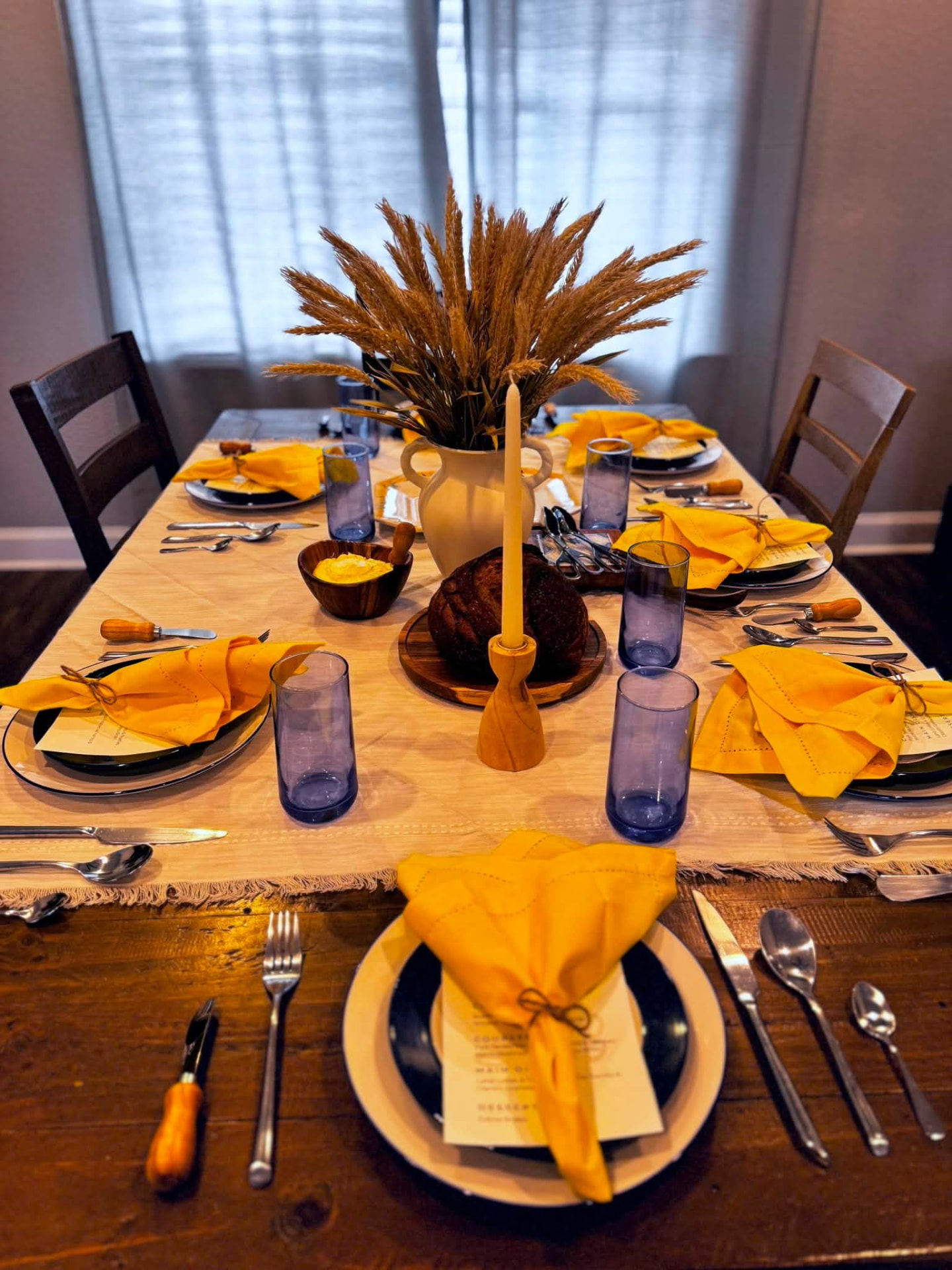
- 02Afternoon: buy the fish. Wash and cut vegetables into matchsticks. Set the table.
- 03Ninety minutes out: cook and season the rice, then leave it covered with a damp cloth.
- 04Thirty minutes out: slice the fish, arrange the boards, get a drink into everyone's hand.
- 05Serve: roll, cut, plate, repeat. Keep the knife wet and the pace unhurried.
One honest disclaimer
This is a real method and it will get you a genuinely good sushi night at home. It is not, however, Chef Asa's method. Our rice seasoning, our cures, our sauces and the specialty rolls we build for clients stay in-house, because that is the thing you are actually hiring when you book us. Some of the good stuff has to stay secret so it still feels like a discovery when it lands on your table.
So treat the above as the foundation. What we serve at a Room 32 event is what happens when someone does this several hundred times, sources fish through relationships rather than a retail counter, and gets to bring the knives they trained on.
Or tell us the night you want and we will build it
When we run an at-home sushi experience, you do not hand us a menu. You describe the scene: the vibe you are after, who is coming, what the room should feel like when the first plate lands. We put our creativity to work from there and cater to the needs and wants you have not thought to mention yet.
Six people at a kitchen island in Virginia Beach or a full house in Norfolk, Chesapeake, Portsmouth or Williamsburg, we make it the way you want it to be, then clean the kitchen and leave you to the rest of the evening.
Bring Room 32 to your table
Private dinners, at-home sushi experiences and catering across Virginia Beach, Norfolk, Chesapeake, Portsmouth and Williamsburg.
Start an InquiryLearn more about our personal chef service in Virginia Beach or luxury catering for private events.